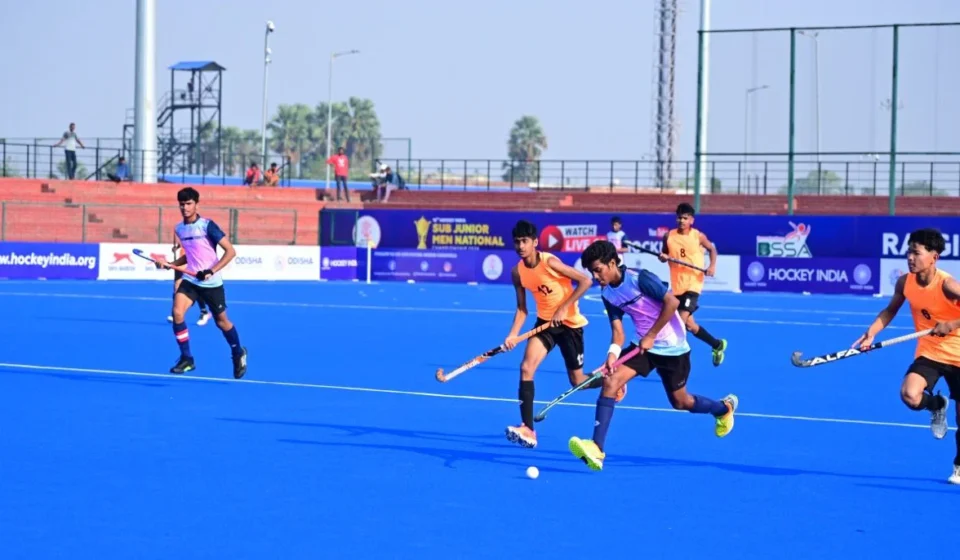

Have you ever sat in a classroom or watched a quiz show and heard that hockey is the national game of India? Most of us grew up believing this was a hard fact. We feel a surge of pride when we think about our hockey legends sprinting across the field. However, if you look at official government records, you might be in for a bit of a surprise! It turns out that the story of our national sport is much more interesting than a simple “yes” or “no” answer.
In this article, we are going to dive deep into the history of sports in our country. We will look at why everyone thinks hockey holds the crown and what the government actually says about it. From the golden era of the Olympics to the rise of cricket and kabaddi, let’s explore the games that define our national identity. Whether you are a student, a sports fan, or just curious, this guide will clear up all the confusion once and for all.
Is Hockey Officially the National Game of India?
The short answer is no. Even though many school textbooks and websites list it as such, India does not have an officially designated national game of India. This was confirmed by the Ministry of Youth Affairs and Sports in response to several Right to Information (RTI) queries over the years. The government explained that their policy is to encourage and promote all sports equally rather than picking just one to be the “national” leader.
This news often shocks people because hockey is so deeply woven into our culture. We have a “National Sports Day” on August 29th, but even that is technically a tribute to a player rather than a declaration for the sport itself. By not choosing a single game, the government aims to keep the door open for every athlete, whether they play badminton, wrestling, or football.
Why Does Everyone Believe Hockey is the National Game?
If it isn’t official, why is the idea so common? The reason is history. Between 1928 and 1956, India was a global superpower in field hockey. During this “Golden Age,” the Indian team won six consecutive Olympic gold medals. This incredible dominance made hockey synonymous with Indian excellence. When the world thought of Indian sports, they thought of a hockey stick.
Because of this massive success, the term national game of India started being used in general conversation, newspapers, and eventually, school books. It became a “de facto” national sport—meaning it was treated as one by the public, even if there was no law or official paper saying so. It’s a classic example of how a sport’s success can become a part of a nation’s soul.
The Incredible Legacy of Major Dhyan Chand
You cannot talk about the national game of India without mentioning the “Wizard of Hockey,” Major Dhyan Chand. He is the man who put India on the sporting map. Legend has it that his stickwork was so magical that authorities in Holland once broke his hockey stick to check if there was a magnet inside! He led India to three Olympic golds in 1928, 1932, and 1936.
Dhyan Chand’s influence was so great that his birthday is celebrated as National Sports Day across the country. He represents the peak of Indian sporting spirit. His dedication and skill are the primary reasons why hockey is held in such high regard today. Even without an official title, his legacy ensures that hockey will always be special to every Indian.
Understanding the 2020 RTI Clarification
In 2020, a school teacher filed an RTI (Right to Information) query asking for the exact date when hockey was declared the national game of India. The Ministry of Youth Affairs and Sports responded clearly: “The Government has not declared any sport/game as the National Game of the country.” This response went viral because it debunked a decades-old myth.
The government’s reasoning is actually quite fair. They believe that India is a land of many talents. By officially naming one sport as “the best,” they might accidentally make athletes in other sports feel less important. Their goal is to create a “multi-sport nation” where a gold medal in shooting or javelin is celebrated just as much as a win in hockey.
The Rise of Cricket: India’s Most Popular Sport
While hockey has the history, cricket has the numbers. If we define the national game of India by popularity, cricket would win by a landslide. Ever since the 1983 World Cup win, the passion for cricket has exploded. Today, the Indian Premier League (IPL) is one of the biggest sporting events in the world, and stars like Virat Kohli are household names.
Cricket is played in almost every street and “gully” in India. It brings the whole country to a standstill during big matches. While it doesn’t have the official “national” tag either, it is undeniably the sport that captures the most hearts and television screens today. This shift in popularity is another reason why the government stays neutral on naming a national game.
Kabaddi: The Indigenous Powerhouse
Kabaddi is a sport that truly belongs to the soil of India. It is an indigenous game that has been played in villages for centuries. In recent years, the Pro Kabaddi League has turned this traditional sport into a high-energy, professional spectacle. The Indian national team has also been incredibly successful, winning almost every major international trophy in the sport.
Many people argue that if there were to be a national game of India, it should be kabaddi because it originated here. It requires no expensive equipment—just a small patch of ground and a lot of strength and breath control. Its growing popularity shows that Indians are reconnecting with their roots while still embracing modern sports.
How Other Sports are Growing in India
India is currently seeing a “sports revolution.” We are no longer just a one-sport or two-sport nation. Thanks to programs like “Khelo India,” athletes in badminton, wrestling, boxing, and athletics are getting more support than ever before. Names like Neeraj Chopra and PV Sindhu have become national heroes, proving that India can win on any stage.
This diversity is exactly why the government hasn’t picked a single national game of India. Whether it is the football fans in West Bengal and Kerala or the wrestling hubs in Haryana, every region has its own favorite. Promoting all these disciplines equally helps India become a stronger contender in the overall Olympic medal tally.
Historical Performance Table: Major Companies & Sports Support
In India, major corporate entities often support the growth of sports. Here is a look at some of the big names and their contributions to the sporting landscape.
| Company Name | Industry | Notable Sports Involvement |
| Tata Group | Conglomerate | Long-time sponsors of Archery and Athletics; Tata Football Academy. |
| Reliance Industries | Conglomerate | Owners of IPL teams and major backers of the ISL (Football). |
| JSW Group | Steel/Energy | Established “Inspire Institute of Sport” to train Olympic athletes. |
| Sahara India | Diversified | Famously sponsored the Indian Hockey and Cricket teams for years. |
| Hero MotoCorp | Automotive | Massive sponsors of Indian Football and Golf. |
Is it Time to Officially Declare a National Game?
There is a constant debate about whether India should finally name a national game of India. Some feel that giving hockey the official title would help revive the sport and give it the funding it deserves. They argue that it would be a fitting tribute to our history and the legends who wore the Indian jersey.
On the other hand, many experts believe the current system is better. By not having a “favorite,” the government encourages kids to pick up whatever sport they love. Whether a child wants to be the next hockey wizard or the next chess grandmaster, they should feel that their country supports them. Diversity is India’s strength, and that applies to sports too.
Conclusion
In the end, while there is no official national game of India on paper, the title lives in our hearts. For some, it will always be hockey because of the golden history and the magic of Dhyan Chand. For others, it’s cricket because of the thrill of a last-ball six, or kabaddi because it represents our heritage.
The most important thing isn’t the title; it’s the spirit of play. As long as we continue to support our athletes and cheer for the tricolor, every game played with passion is a national game. So, the next time someone asks you about India’s national sport, you can tell them the truth: we love them all!
Frequently Asked Questions (FAQs)
Q1: Is hockey the national game of India?
No, hockey is not officially the national game. The Indian government has not designated any sport with that title to ensure all sports are promoted equally.
Q2: When was hockey first thought to be the national game?
The belief started during India’s “Golden Era” of hockey (1928–1956) when the team won six consecutive Olympic gold medals.
Q3: Who is the most famous Indian hockey player?
Major Dhyan Chand is considered the greatest Indian hockey player. His skills were so legendary he was nicknamed “The Wizard.”
Q4: Does India have a national sport for kids in schools?
Schools often teach that hockey is the national game due to outdated textbooks, but there is no official government order stating this.
Q5: What is the most popular sport in India today?
Cricket is currently the most popular sport in terms of viewership and fan following, followed by football and kabaddi.
Q6: Why hasn’t the government declared a national game?
The Ministry of Sports wants to encourage a multi-sport culture and believes declaring one sport as the “national” one might discourage others.