Streamlining Cosmetic Production: The Engineering and Impact of the Modern Lotion Filling Machine

The cosmetics and personal care industry relies heavily on precision, speed, and consistency. From luxurious face creams to everyday body milks, the market demands products that look immaculate and are dosed with absolute accuracy. Behind every perfectly filled bottle on a store shelf is a highly engineered asset: the lotion filling machine. This equipment bridges the gap between bulk manufacturing and consumer-ready packaging, handling unique formulation challenges like high viscosity, temperature sensitivity, and aeration risks. Understanding how these machines operate, the distinct variations available, and how to select the right system is vital for any manufacturing facility aiming to maximize throughput while minimizing waste.
Understanding Lotion Behavior and Mechanical Challenges
Lotions are complex fluids that do not behave like simple liquids. Most skincare emulsions are non-Newtonian fluids, meaning their thickness or viscosity changes under stress. When a lotion sits idle in a hopper, it may appear thick and resistant to flow, but when subjected to mechanical forces during pumping, its viscosity can drop significantly. This characteristic requires filling equipment that can handle shifting flow profiles without shearing the product, which could break the delicate emulsion of oil and water and ruin the batch.
Furthermore, skincare formulations are highly susceptible to air entrapment. If air bubbles are introduced into the lotion during the packaging stage, it can lead to inaccurate fill volumes, shortened shelf lives due to oxidation, and unsightly pockets inside transparent bottles. Modern packaging machinery must feature design elements like bottom-up filling, where the filling nozzles lower into the very base of the container and slowly retract as the liquid rises, effectively suppressing air pockets and preventing foaming.
Hygiene and contamination control present another critical operational hurdle. Lotions often contain organic ingredients, botanicals, and vitamins that serve as breeding grounds for bacteria if the machinery is not cleaned meticulously. Packaging facilities require systems designed with high-grade stainless steel, typically 316L, and constructed with sanitary tri-clamp fittings that eliminate internal crevices where stale product could hide. Many automated lines now integrate advanced automated cleaning systems that flush the entire fluid path with hot water and sanitizing agents without requiring operators to dismantle the pumps.
Key Technologies Driving Modern Lotion Filling Systems
Manufacturers utilize several filling methodologies to handle cream and lotion products, each relying on a distinct engineering principle to achieve precise dosing.
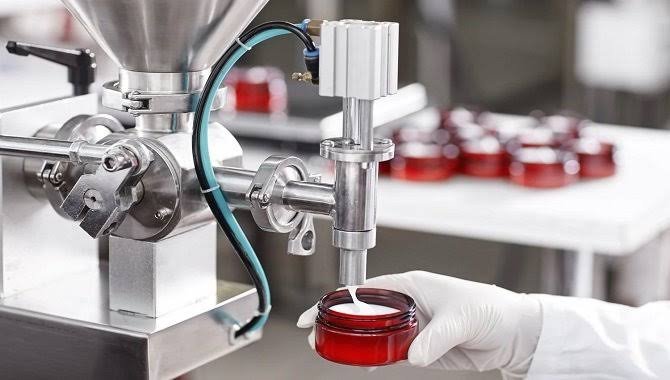
Piston fillers are the workhorses for thick creams and dense body butter. These systems use a volumetric method where a high-precision cylinder draws a predetermined volume of lotion from a hopper during the intake stroke. On the discharge stroke, a rotary valve turns, and the piston pushes that exact volume out through the filling nozzle into the container. Because the mechanical force is positive and direct, piston filling handles highly viscous products with ease, ensuring an exact volumetric fill regardless of shifts in product density or temperature.
Servo-driven pump fillers represent a highly flexible, modern approach to packaging line design. Instead of relying on mechanical linkages and manual stroke adjustments, these machines utilize individual servo motors to drive progressive cavity pumps or rotary gear pumps. The digital interface allows operators to program precise rotation profiles, dictating exactly how fast the pump spins at the start, middle, and end of the fill cycle. This level of software control allows for instant adjustments when changing from a light face lotion to a thick body scrub, saving hours of physical changeover time.
Flow meter filling technology relies on electronic sensors rather than physical chambers to measure the product. As the lotion passes through the system, either electromagnetic or mass-flow Coriolis meters measure the precise volume or weight of the liquid traveling toward each nozzle. Once the target metric is hit, a pneumatic valve snaps shut. While flow meters represent a higher initial capital investment, they feature fewer moving parts than piston or gear configurations, resulting in remarkably low maintenance costs, exceptional long-term reliability, and simple cleaning protocols.
Classifications of Lotion Filling Equipment by Automation Level
The scale of a manufacturing operation determines the level of machinery automation required to remain competitive and profitable.
Manual and semi-automatic table-top machines are the ideal starting point for boutique brands, testing laboratories, and small-batch contract packagers. These setups typically feature a single piston pump connected to a conical hopper. An operator manually places a bottle under the nozzle and presses a foot pedal to initiate a single fill cycle. While production speeds are limited, these entry-level systems provide small businesses with the dosing accuracy of industrial operations, eliminating the inconsistent fills and product waste associated with hand-pouring.
Automatic inline filling systems are built for medium-to-large production facilities requiring high daily throughput. These machines feature a multi-nozzle configuration arrayed along a linear conveyor belt. Automated starwheels or indexing pins pause incoming bottles, align them perfectly beneath the dispensing array, and release them down the line once filled. An inline automatic system can scale easily, allowing manufacturers to start with a four-nozzle configuration and add more nozzles as demand increases, ultimately achieving speeds up to a hundred bottles per minute.
Monoblock rotary packaging systems represent the pinnacle of high-speed cosmetic packaging. In a monoblock configuration, multiple packaging phases are integrated into a single, compact, continuous-motion rotary dial. As a bottle enters the system, it is indexed into a pocket and moves seamlessly from the filling station directly into the capping, plugging, and labeling zones without ever leaving the central starwheel. This layout minimizes the footprint of the machinery, reduces the risk of bottle tip-overs, and handles thousands of containers an hour with minimal operator intervention.
Critical Factors to Consider When Selecting Equipment
Investing in a packaging line requires a balanced analysis of current production demands and future growth projections to avoid costly bottlenecks.
Product viscosity range remains the foundational criteria when sourcing equipment. A machine optimized to run a watery, alcohol-based toner will fail completely when fed a thick hand cream, while a heavy-duty piston filler might overwork and degrade a delicate face serum. Buyers must provide machine manufacturers with accurate viscosity data across a spectrum of operational temperatures to ensure the pump assemblies, tubing diameters, and nozzle orifices are scaled properly to prevent product restriction or excessive shearing.
Container versatility is another major consideration in the cosmetics industry, where brands frequently use unique bottle geometries, pump caps, and custom jars to stand out on the shelf. The chosen filling machine must feature adjustable guiding rails, variable height nozzle assemblies, and easily swappable neck-holding grippers. Systems engineered with toolless changeover designs allow factory workers to swap out container components in minutes, keeping line downtime to an absolute minimum during product transitions.
Production volume targets ultimately dictate the number of filling heads and the level of automation needed. A facility running ten thousand units a week can easily manage with a semi-automatic or basic four-head inline filler. However, operations looking to scale into major retail distribution networks will need high-speed, multi-head automatic machinery that easily hooks into automated unscrambling tables, induction sealers, and case packers to create a completely untouched, hands-free production ecosystem.
Conclusion
The modern lotion filling machine is far more than a basic liquid dispenser; it is a finely tuned piece of industrial engineering designed to respect the fragile chemistry of skincare products while meeting rigorous commercial targets. By understanding the fluid dynamics of emulsions and matching product traits to the correct pump mechanism, manufacturers can radically reduce waste, eliminate under-filling liabilities, and preserve formula integrity. Whether a company is a growing artisan startup or a global cosmetics powerhouse, choosing a filling system built with sanitary components, flexible changeover capabilities, and the appropriate level of automation ensures long-term operational resilience and a consistent, high-quality end product for consumers.